


| Issue |
Int. J. Simul. Multidisci. Des. Optim.
Volume 17, 2026
Intelligent Simulation and Optimization Tools for Complex Industrial Systems
|
|
|---|---|---|
| Article Number | 11 | |
| Number of page(s) | 14 | |
| DOI | https://doi.org/10.1051/smdo/2026009 | |
| Published online | 01 May 2026 | |
Research Article
A multi-criteria decision model for distribution center location: Pythagorean fuzzy TOPSIS approach
1
Faculty of Business Administration, Industrial University of Ho Chi Minh City, Ho Chi Minh City, Vietnam
2
Faculty of Economics, Dong Nai Technology University, Dong Nai, Vietnam
3
Fakultas Ekonomi dan Bisnis Universitas Nusantara PGRI Kediri, Indonesia
4
World Citi Colleges, Manila, The Philippines
5
Central University of Haryana, Jant-Pali, Mahendergarh - 123031, Haryana, India
* e-mail: This email address is being protected from spambots. You need JavaScript enabled to view it.
Received:
12
January
2026
Accepted:
31
March
2026
Abstract
The selection of distribution center (DC) location is of paramount importance for production systems since an appropriate placement significantly influences transportation costs, delivery lead times, inventory management efficiency, and the overall level of customer service. Nevertheless, traditional MCDA methods in the prior literature fail to capture uncertainty, hesitancy, and vagueness of the subjective judgment. To overcome this challenge, this paper aims to apply the Pythagorean fuzzy TOPSIS (tchnique for order of preference by similarity to ideal solution) approach to select the most suitable location for the siting of a DC. The paper’s main originality is to integrate the traditional TOPSIS and the Pythagorean fuzzy sets (PFSs) to cope with uncertain information flexibly in the process of hesitant decision-making. The numerical example from the MBS Logistics & Warehousing Limited Group (hereafter MBS) demonstrates the Pythagorean fuzzy TOPSIS as a practical, flexible, and useful tool in dealing with uncertainty, hesitancy, and vagueness in practice. On top of that, sensitivity analysis with benchmarking and scenarios was carried out to assess the robustness of the proposed method in selecting a suitable location. The paper also provides theoretical references for methodological research in MCDM (multiple-criteria decision-making). In practice, DC managers can systematically compare different locations based on multiple factors (i.e., logistics system attractiveness, industrial hubs, transportation costs, etc.) while accounting for uncertainty in judgments.
Key words: Pythagorean fuzzy TOPSIS / hesitancy / traditional TOPSIS / Pythagorean fuzzy sets / MCDM
© N.T. Huynh et al., Published by EDP Sciences, 2026
 This is an Open Access article distributed under the terms of the Creative Commons Attribution License (https://creativecommons.org/licenses/by/4.0), which permits unrestricted use, distribution, and reproduction in any medium, provided the original work is properly cited.
1 Introduction
1.1 Research objectives
It has been argued that enterprises operating in the service-related industries (i.e., DCs) predominantly depend on the geographic location to enhance the competitive advantages and attract more customers to use their service. Especially, spatial location is considered one of the most essential criteria for siting a new DC. Kang et al. [1] explained that it would be quite challenging and too costly for DC investors to relocate and reconfigure their product offerings when choosing a wrong DC location. According to Agrebi and Abed [2], the suitable DC location is of paramount importance because it is a good sign of superior DC performance as to revenue generation in the short-and-long run. The vast body of extant literature also pointed out the strategic importance of the DC location. Erden et al. [3] and Ross and Jayaraman [4] argued that the reasonable location was also regarded as an essential element for entrepreneurs to invest in a DC alongside the surrounding environment and infrastructure. Besides, Chen [5] studied the distribution center location selection problem under a fuzzy environment and illustrated that the spatial location was among the top criteria used to evaluate and select a candidate site.
As described above, the desirable DC location selection is seemingly crucial, but how to select it has been interested in many researchers and practitioners during the past four decades. Additionally, DC location selection is viewed as a multi-criteria decision-making (MCDM) analysis, which deals with several conflicting criteria and alternatives to be considered simultaneously. An excellent review of the MCDM approach and its practical application in logistics and supply chain management could be found in the research of Erden et al. [3], Muerza et al. [6], Wang et al. [7], and Zhang et al. [8]. Due to the popularity of the MCDM approach, it has also been deployed in some areas, such as engineering, renewable energy, healthcare, and public transportation systems. Nevertheless, the use of the traditional MCDA methods in the prior literature exists, with some research limitations that need to be overcome.
These days, the MCDM approach’s extensions have been proposed to cope with uncertain, vague, and imprecise judgments. Thus, the application of fuzzy sets, intuitionistic fuzzy logic, fuzzy TOPSIS, grey numbers, PROMETHEE, ELECTRE, VIKOR, and KEMIRA has been becoming more and more popular in empirical studies. Among those, the Technique for Order of Preference by Similarity to Ideal Solution (TOPSIS), which was initially developed by Hwang and Yoon [9], could be regarded as one of the most influential and worthy methods for making group decisions. Initially, the TOPSIS technique is used to select feasible alternatives with precise, complete, and crisp judgments, which are usually unrealistic in many real-case decision-making scenarios because human evaluation is intrinsically vague and incomplete. To overcome this limitation, Chen [10] developed a new TOPSIS model (also known as fuzzy TOPSIS) by incorporating the fuzzy set theory deriving from Zadeh [11] for decision-making situations. Nevertheless, Chen’s approach’s main limitation is hesitant human assessment in the context of imprecise, vague, and incomplete information.
Therefore, this study aims to fill the existing literature gap by deploying the Pythagorean fuzzy TOPSIS approach in selecting a suitable location for DC construction. Although the integration of PFSs and the TOPSIS technique has been deployed in selecting a sustainable recycling partner in the manufacturing sector, choosing photovoltaic cells in the renewable energy industry, assessing hospital service quality in the healthcare sector, and evaluating potential risks in the natural gas pipeline project, it has, to the best of the authors’ knowledge, not been used in selecting the most preferred location for the establishment of a new DC so far. Thus, the current paper can serve as a methodological reference for the relevant literature in terms of the MCDA approach.
1.2 The DC location selection by MCDA
As mentioned above, DC location selection is a critical issue for entrepreneurs to cite a new DC. Thus, extensive literature regarding DC location selection has been carried out so far. According to Perl and Daskin [12], six key dimensions were found to affect the DC location selection, including the economic aspect, neighborhood characteristics, transport, laws and regulations, physical site characteristics, and socio-cultural features. Liu [13] pointed out that an anticipated amount of investment is the most important factor out of six factors affecting the DC location selection from investors’ perspectives. This finding agrees with that of Chia Jane [14] and Chen [5]. By contrast, using the fixed-charge facility location model, Nozick and Turnquist [15] demonstrated that geographical regions and locations were crucial for decision-makers to invest in the DC industry. The argument is relatively consistent with that of Oum and Park [16], who argued that DC investors were interested in geographical location, traffic conditions, DC facilities, and operational convenience when selecting an DC location for construction. Besides, when choosing a potential site to place a warehouse, investors would base it on distribution capacity, the investor strategy, competitive advantages, governmental subsidies, and other financial incentives.
Another determinant of the DC location selection is an easily accessible capacity for transport in an area, especially a sound road network system and railways and airports. The DC location selection also embraces the provisions of the master plan for the region and the traffic and transportation conditions. In addition, it is asserted that three core characteristics of a site influencing the choice of location for a DC by investors consist of distance from particular places to the DC, physical site features, and neighborhood characteristics. It is argued that the so-called particular places relate to relative locations of other services and facilities interesting investors, such as closeness to industrial hubs, population density, number of retailers in the region, police stations, availability of highways, supermarkets, and quality of seaport services. Physical site features are also known as the quality and inherent values of the particular site, such as the level of skilled labor, labor regulations, and transport costs. Moreover, neighborhood characteristics are identified as an exogenous factor to the specific site but an endogenous one to the surrounding region. They are likely to comprise a neighborhood’s air quality, safety and security, public services quality, and environmental regulations.
To sum up, the paper summarizes some typical studies in terms of the MCDM’s application in the DC industry from 1985 to 2024, which are shown in Table 1.
The MCDM’s application in selection distribution center location.
1.3 Pythagorean fuzzy TOPSIS
As noted earlier, the application of the TOPSIS method has been evolving through a few stages, from traditional TOPSIS based on crisp and complete information to intuitionistic fuzzy TOPSIS dealing with the vague and unclear environment in the context of hesitation in subjective human judgments. According to Atanassov’s approach, let μ and v stand for a membership and a non-membership grade, respectively, with the constraint of μ + v ≤ 1; and then a non-negative value, π = 1 − μ − v, is defined as the hesitation part in the subject judgment. From its exploration, intuitionistic fuzzy TOPSIS has been extended by researchers and scholars, typically Chen [10], Ye [24], and Shen et al. [25], and has been intensively deployed in many different disciplines towards MCDM scenarios.
However, the condition of μ + v ≤ 1, in turn, is a considerable limit on the determination of the membership and non-membership grades. To cope with this challenge, the PFS, which is depicted by a membership function (μ) and a non-membership function (v) with the restriction of μ2 + v2 ≤ 1, is developed by Yager [26]. The idea of the PFS in the fuzzy and hesitant decision-making environment may be explained most simply as follows: one expert prioritizes about a specific alternative on a criterion with the membership grade of  and the non-membership grade of
  , then the intuitionistic fuzzy number (IFN) fails to satisfy the condition of μ+v ≤ 1 because
  . Inversely, the Pythagorean fuzzy number (PFN) is likely to capture the preference information because
  . Noticeably, the space of the Pythagorean fuzzy membership grade is greater than that of the intuitionistic fuzzy membership grade (Fig. 1) and covers more massive degrees of uncertainty in MCDM situations. The recent study integrated fuzzy TOPSIS and the PFS, which is also called the Pythagorean fuzzy TOPSIS, by considering hesitation in humans’ subjective assessments in making a decision. Other studies also argue that the application of the PFS in the absurd and uncertain environment is more effective and flexible than that of the intuitionistic fuzzy set.
The remainder of this article is structured as follows. The next part is to outline the fundamental concepts in terms of Pythagorean fuzzy numbers and Pythagorean fuzzy sets. The detailed steps to select the IDC location are described in the decision-making process. The last section is concluding remarks and a few suggestions for further studies.
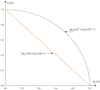 |
Fig. 1 The space for the IFN and the PFN. |
2 The fundamental concepts
Before applying the Pythagorean fuzzy TOPSIS to find out the best alternative, we first introduce some basic background regarding PFSs and PFNs, which are used in the following sections.
Concept 1: According to Atanassov [27], let Y be a universe of discourse, then an IFN ψ on Y could be defined by ψ = {〈y, μψ(y), vψ(y)|y ∈ Y〉}, where Y ∈ [0, 1]. For the element y ∈ Y to the fuzzy set ψ, the function μψ and vψ are the grade of membership and non-membership, respectively, with the constraint μψ(y) + vψ(y) ∈ [0, 1]. Then the degree of indeterminacy of the element y ∈ Y could be obtained by πψ (y) = 1 − [μψ(y) + vψ(y)]. Simply stated, the fuzzy number ψ=(μψ, vψ) is described as the IFN.
Concept 2: According to Yager and Abbasov [28], for the universe of discourse
Y, the PFN θ on Y is defined as θ = {〈y, μθ(y), vθ(y) | y ∈ Y〉}, where Y ∈ [0, 1]. Then the function μθ and vθ are the grade of membership and non-membership of the element y ∈ Y to the fuzzy set θ, respectively, with the constraint (μψ(y))2+(vψ(y))2 ∈ [0, 1]. For the component y ∈ Y, the degree of indeterminacy could be obtained by  . To put it more simply, the fuzzy number θ = (μθ, vθ) is described as the PFN.
Concept 3: Let θj = (μθj
, vθj
); j = 1, 2, …, n be a collection of PFSs and wj = (w1, w2, …, wn) denote the importance degree of θj, satisfying wj ≥ 0 and  . Then, the Pythagorean fuzzy weighted averaging (PFWA) operator could be derived by

and the Pythagorean fuzzy weighted geometric (PFWG) operator could be symbolized by:

Concept 4: With two any PFSs θ1 = (μ1, v1) and θ2 = (μ2, v2), the normalized Euclidean distance (NED) between them could be obtained by:

3 Empirical application
This paper employed the MBS Logistics & Warehousing Limited Group (hereafter MBS) to verify the proposed evaluation framework. Nowadays, this corporation is one of the most major investors in the DC industry in Vietnam. According to the development master plan to 2030, the corporation is planning to build a DC facility in the Southeast region of Vietnam. Accordingly, this section details the application of the proposed approaches for locating a DC.
3.1 Research framework
The research framework for selecting the DC location is schematically depicted in Figure 2. This framework includes some main steps, which could be described in more detail, as follows.
First of all, a set of criteria concerning DC location selection is determined in light of the literature review. Then, some of the most important criteria are selected by surveying experts working in the hospitality and hotel industry in Ho Chi Minh City of Vietnam. Aftermaths, a committee board, including five experts, is set up to assess the locations according to criteria. The experts in our interview are considered decision-makers and must satisfy two minimum requirements: (1) he/she has got at least eight years of working in the hospitality industry, and (2) he/she must hold a managerial position in the workplace. After determining the experts’ relative importance level, we deploy the PFWA operator to combine the single Pythagorean fuzzy judgment matrices (PFJMs) into the aggregated PFJMs. Next, a multiplication operation on PFNs is adopted to construct the aggregated weighted PFJM. Then, the Pythagorean fuzzy positive ideal solution (PFPIS) and the Pythagorean fuzzy negative ideal solution (PFNIS) are calculated on the basis of benefit and cost-type criteria. Next, the paper adopts the NED to compute the distance between an alternative and PFPIS (PFNIS). Afterward, instead of using a closeness index, we conduct a revised closeness index (RCI) to rank and find out the most suitable location. Lastly, sensitivity analysis is carried out to illustrate the robustness of the proposed method.
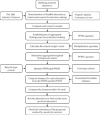 |
Fig. 2 The proposed evaluation flowchart. |
3.2 The criteria and alternatives for the DC location selection
To identify the necessary criteria for selecting the DC location, the paper is based on the extensive literature review and the DC industry’s features. To simply explain the application of the Pythagorean fuzzy TOPSIS, the study filtered the six most important criteria, as seen in Table 2.
The evaluation criteria for DC location selection.
3.3 The steps for the application of the Pythagorean fuzzy TOPSIS
Let H = (H1, H2, …, H1, …, H1); i = 1, 2, …,l stand for the vector of l possible alternatives and E = (E1, E2, …, Ek, …, Eh); k = 1, 2, …, h represent the vector of experts, who are in charge of judging the vector of conflict criteria C = (C1, C2, …, Cj, …, Cn); j = 1, 2, …, n. In this situation, the kth expert will subjectively judge the ith alternative based on the jth criterion. The expert’s assessment information will be represented by a Pythagorean fuzzy judgment matrix, which could be denoted as  . In which
  represent the grade of satisfaction, dissatisfaction, and indeterminacy of the ith alternative, respectively. Generally speaking, the Pythagorean fuzzy judgment matrix could be described as

As such, the following steps will shed light on how to find out the best alternative with the principle: minimize the gap from the PFPIS to alternatives and maximize the gap from the PFNIS to alternatives. The adoption of the Pythagorean fuzzy TOPSIS in selecting a suitable DC includes 8 steps and can be seen in the appendix.
3.4 The numerical case
Step 1: Experts’ weight. Table 3 points out the linguistic scale for criteria and the expert’s relative importance level. In this study, an assessment board includes five members (Tab. 4), who act as the decision-makers. Criteria to select experts include (i) substantial professional experience in facility location decisions, (ii) familiarity with distribution network planning and operational constraints, and (iii) decision responsibility related to DC siting. Based on their job title and working experience, the paper computed their weight by Equation (1), the results are represented in the last row of Table 4.
In more detail, the first expert is working with the chief executive officer’s position and has got a thirteen-year working experience. So, the study judged this expert as “important”. So, his importance weight may be obtained, as follows:

Step 2: Establishment of the aggregated PFJM. Based on the linguistic scale for alternatives’ relative importance level, as shown in Table 5, experts will evaluate the six locations in terms of the criteria. Their assessment results are represented in Table 6. As mentioned earlier, for each expert, we have one Pythagorean fuzzy judgment matrix  . That is, Table 7 shows the Pythagorean fuzzy judgment matrix for five experts.
Then, the aggregated PFJM could be obtained by Equation (3), and its result is as below:
See equation below

Step 3: Computation of the relative importance weight for criteria. The committee board members evaluated the degree of relative importance of criteria based on the linguistic terms, as shown in Table 3. And their judgment information is given in Table 8, and then it is translated into corresponding PFNs, as pointed out in Table 9.
Next, the aggregated matrix could be found on the basis of Equation (5), as below:

Step 4: Using Equations (6), (7), (8), and (9), the aggregated weighted PFJM could be found, as shown in Table 10.
Step 5: Computation of the PFPIS and the PFNIS. From academic and practical perspectives, some criteria, for instance, C1, C2, C4, C5, and C6, are considered the benefit-type criteria. Meanwhile, transportation costs (C3) are identified as the cost-type criterion. Therefore, we have T1 = {C1, C2, C4, C5, C6} and T2 = {C3}. Thus, the PFPIS (P+) and the PFNIS (P-) could be obtained by Equations (10) and (11), as follows:

and

Step 6. Calculating distance from each location to the PFPIS and the PFNIS by using Equations (14) and (15). Then, the RCI could be derived by Equation (17). Ultimately, the most suitable site for the construction of DC, as shown in Table 11, is selected on the basis of Equation (18). The result indicates that the location H1 is the most suitable for establishing the new DC from experts’ subjective judgments.
The linguistic scale for criteria and expert’s relative importance level.
Experts’ relative importance level.
The linguistic variable for alternatives’ relative importance level.
Experts’ judgment for alternatives’ relative importance level.
Each expert’s Pythagorean fuzzy judgment matrix.
The experts’ judgment information in terms of the weight of criteria.
The relative importance weight of criteria.
The aggregated weighted PFJM.
The final results for the location selection.
3.5 Sensitivity analysis
In this research, we used the sensitivity analysis technique to assess the Pythagorean fuzzy TOPSIS approach’s robustness in selecting the best location. To do so, we introduced seven various scenarios, including the different alternative criteria and decision-makers (Tab. 12). Also, the graphical representation of the alternative’s ranking orders is shown in more detail in Figure 3. Clearly, it is reasonable to conclude that the proposed approach is somewhat robust under various scenarios. Except for scenarios 1 and 4, in which there is a little change in the alternative’s ranking, the others point out the same ranking order as the current scenario. Additionally, the result argues that location 1 (H1) is always the best choice regardless of which scenario is deployed. Therefore, it could be confirmed that the Pythagorean fuzzy TOPSIS can assist decision-makers when assessed criteria are subjective, and judgment information is vague and ambiguous.
This paper also compares the ranking of alternatives according to the different MCDA methods. Figure 13 shows that the rankings differ slightly across methods. The main reason is that each technique defines “best” in a different way and therefore reacts differently to trade-offs among criteria. More specifically, classical TOPSIS prioritizes alternatives that are simultaneously close to the positive ideal and far from the negative ideal, while intuitionistic and Pythagorean fuzzy TOPSIS further adjust the evaluation by explicitly modeling uncertainty and hesitancy in expert judgments. In contrast, VIKOR is a compromise-ranking method. Particularly, it balances overall group utility and individual regret for judgements. As a result, an alternative that performs very well on average but has one notable weakness may be penalized more in VIKOR than in TOPSIS-based methods, thus causing minor rank swaps among close competitors.
The ranking result under different scenarios.
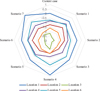 |
Fig. 3 Sensitivity analysis results. |
The ranking result under different MCDA methods.
3.6 Managerial implications
It is evident that the application of the Pythagorean fuzzy TOPSIS is a robust method for evaluating and selecting the best DC because it reduces reliance on intuition-based decisions, thus enhancing objectivity in complex MCDM scenarios. In practice, DC managers can systematically compare different locations based on multiple factors (i.e., logistics system attractiveness, industrial hubs, transportation costs, etc.) while accounting for uncertainty in judgments. Additionally, it has been argued that selecting appropriate DC locations can optimize the supply chain via minimizing transportation costs; therefore, firms can use this model to prioritize locations to satisfy their long-term supply chain strategies. Furthermore, traditional decision-making models (i.e., VIKOR, DANP, and SWARA) often struggle with the imprecise and uncertain nature of location selection criteria. This paper found that the Pythagorean fuzzy extends traditional fuzzy logic by allowing for the representation of hesitation in human assessment, which is crucial when dealing with qualitative and subjective criteria. Pragmatically, this approach enables DC operators to make reliable decisions in the context of vague and incomplete data (i.e., geopolitical risks, regulatory changes, and economic volatility in different regions). While this approach has some advantages in handling uncertainty and judgment ambiguity, organizations without strong analytical expertise may find it challenging to implement this model effectively.
4 Conclusion
Selecting a suitable location to build a new DC is always a strategic and challenging decision for logistics investors. This is in part because human evaluations are often vague, ambiguous, fuzzy, and imprecise. As a result, some novel methods have been developing to capably overcome these challenges, such as DEMATEL, VIKOR, DANP, SWARA, and WS-PLP. Nonetheless, these methods’ main limitation is failing to capture subjective judgment information in hesitant and uncertain environments. Thus, the paper deploys the integration of fuzzy TOPSIS and the PFS, which might cover much larger degrees of complexity and uncertainty than other nonstandard fuzzy approaches, to determine the most preferred feasible alternative.
From a comprehensive literature review, the paper identifies the most crucial criteria affecting the DC location selection, with the six most important criteria being selected. By applying the Pythagorean fuzzy TOPSIS approach, the location H1 is the most suitable for siting the new DC. Further, the paper carried out a comparative analysis to check the proposed method’s sensitivity degree by considering seven different scenarios. The sensitivity result points out that the Pythagorean fuzzy TOPSIS is pretty stable in determining the feasible alternative.
Although the Pythagorean fuzzy TOPSIS has been arguing practicality, flexibility, and effectiveness in dealing with uncertainty, hesitancy, and vagueness in practice, the main disadvantage of Pythagorean fuzzy TOPSIS is the complexity of mathematical formulations and manipulations. Generally speaking, adopting thoughtful and rigorous analysis, as well as complicated techniques under the Pythagorean fuzzy environment, may be a tough and ambitious task for most decision-makers and practitioners. Lastly, it is worth noting that this is the first study adopting the Pythagorean fuzzy TOPSIS to select a location for building a new DC. This method should be deployed in other logistics industry areas such as material supplier selection, service provider selection, etc.
Funding
This study received no funding.
Conflicts of interest
Authors declared no conflict of interest.
Data availability statement
Data will be made available on request.
Author contribution statement
Nguyen Tan Huynh - Conceptualization and Data Collection Pham Thi Mong Hang - Writing the First Draft Faisol - Methodology and Data Analysis Patrick Pascasio - Data Analysis and Draft Review Vikas Kumar - Conceptualization, Data Analysis and Review, Communication.
Ethical approval
This research did not involve human participants or animals. Therefore, ethical approval was not required.
References
- K. Kang, X. Wang, Y. Ma, A collection-distribution center location and allocation optimization model in closed-loop supply chain for Chinese beer industry, Math. Probl. Eng. 2017, 7863202 (2017) [Google Scholar]
- M. Agrebi, M. Abed, Decision-making from multiple uncertain experts: case of distribution center location selection, Soft Comput. 25, 4525–4544 (2021) [Google Scholar]
- C. Erden, Ç. Ateş, S. Esen, Distribution center location selection in humanitarian logistics using hybrid BWM-ARAS: a case study in türkiye, J. Homel. Secur. Emerg. Manag. 21, 383–415 (2024) [Google Scholar]
- A. Ross, V. Jayaraman, An evaluation of new heuristics for the location of cross-docks distribution centers in supply chain network design, Comput. Ind. Eng. 55, 64–79 (2008) [Google Scholar]
- C.-T. Chen, A fuzzy approach to select the location of the distribution center, Fuzzy Sets Syst. 118, 65–73 (2001) [CrossRef] [Google Scholar]
- V. Muerza, M. Milenkovic, E. Larrodé, N. Bojovic, Selection of an international distribution center location: a comparison between stand-alone ANP and DEMATEL-ANP applications, Res. Transp. Bus. Manag. 56, 101135 (2024) [Google Scholar]
- X. Wang, L. Zhan, Y. Zhang, T. Fei, M.-L. Tseng, Environmental cold chain distribution center location model in the semiconductor supply chain: a hybrid arithmetic whale optimization algorithm, Comput. Ind. Eng. 187, 109773 (2024) [Google Scholar]
- S. Zhang, N. Chen, N. She, K. Li, Location optimization of a competitive distribution center for urban cold chain logistics in terms of low-carbon emissions, Comput. Ind. Eng. 154, 107120 (2021) [Google Scholar]
- C.-L. Hwang, K. Yoon, Methods for multiple attribute decision making, in: Multiple Attribute Decision Making (Springer, 1981), pp. 58–191 [Google Scholar]
- C.-T. Chen, Extensions of the TOPSIS for group decision-making under fuzzy environment, Fuzzy Sets Syst. 114, 1–9 (2000) [CrossRef] [Google Scholar]
- L.A. Zadeh, Fuzzy sets, Inf. Control 8, 338–353 (1965) [Google Scholar]
- J. Perl, M.S. Daskin, A warehouse location-routing problem, Transp. Res. B 19, 381–396 (1985) [Google Scholar]
- C.-M. Liu, Clustering techniques for stock location and order-picking in a distribution center, Comput. Oper. Res. 26, 989–1002 (1999) [Google Scholar]
- C. Chia Jane, Storage location assignment in a distribution center, Int. J. Phys. Distrib. Logist. Manag. 30, 55–71 (2000) [Google Scholar]
- L.K. Nozick, M.A. Turnquist, Inventory, transportation, service quality and the location of distribution centers, Eur. J. Oper. Res. 129, 362–371 (2001) [Google Scholar]
- T.H. Oum, J.-H. Park, Multinational firms’ location preference for regional distribution centers: focus on the Northeast Asian region, Transp. Res. E 40, 101–121 (2004) [Google Scholar]
- L. Yang, X. Ji, Z. Gao, K. Li, Logistics distribution centers location problem and algorithm under fuzzy environment, J. Comput. Appl. Math. 208, 303–315 (2007) [Google Scholar]
- M.-S. Kuo, Optimal location selection for an international distribution center by using a new hybrid method, Expert Syst. Appl. 38, 7208–7221 (2011) [Google Scholar]
- Z. Drezner, C.H. Scott, Location of a distribution center for a perishable product, Math. Methods Oper. Res. 78, 301–314 (2013) [Google Scholar]
- D. Zhuge, S. Yu, L. Zhen, W. Wang, Multi-period distribution center location and scale decision in supply chain network, Comput. Ind. Eng. 101, 216–226 (2016) [Google Scholar]
- Y. He, X. Wang, Y. Lin, F. Zhou, L. Zhou, Sustainable decision making for joint distribution center location choice, Transp. Res. D 55, 202–216 (2017) [Google Scholar]
- G. Musolino, C. Rindone, A. Polimeni, A. Vitetta, Planning urban distribution center location with variable restocking demand scenarios: general methodology and testing in a medium-size town, Transp. Policy 80, 157–166 (2019) [Google Scholar]
- L.N.N. Thu, L. Van Hoang, Q.M. Doan, N.T. Huynh, The performance model of logistic distribution centers: quality function deployment based on the Best-Worst Method, PLoS One 19, 1–17 (2024) [Google Scholar]
- F. Ye, An extended TOPSIS method with interval-valued intuitionistic fuzzy numbers for virtual enterprise partner selection, Expert Syst. Appl. 37, 7050–7055 (2010) [Google Scholar]
- F. Shen, X. Ma, Z. Li, Z. Xu, D. Cai, An extended intuitionistic fuzzy TOPSIS method based on a new distance measure with an application to credit risk evaluation, Inf. Sci. 428, 105–119 (2018) [Google Scholar]
- R.R. Yager, Pythagorean fuzzy subsets, in: 2013 joint IFSA world congress and NAFIPS annual meeting (IFSA/NAFIPS), IEEE, 2013, pp. 57–61 [Google Scholar]
- K. Atanassov, Intuitionistic fuzzy sets VIIITKR’s session, Sofia 1, 983–993 (1983) [Google Scholar]
- R.R. Yager, A.M. Abbasov, Pythagorean membership grades, complex numbers, and decision making, Int. J. Intell. Syst. 28, 436–452 (2013) [Google Scholar]
- S. Dou, G. Liu, Y. Yang, A new hybrid algorithm for cold chain logistics distribution center location problem, IEEE Access 8, 88769–88776 (2020) [Google Scholar]
- R. Huang, M.B. Menezes, S. Kim, The impact of cost uncertainty on the location of a distribution center, Eur. J. Oper. Res. 218, 401–407 (2012) [Google Scholar]
- X. Li, K. Zhou, Multi-objective cold chain logistic distribution center location based on carbon emission, Environ. Sci. Pollut. Res. 28, 32396–32404 (2021) [Google Scholar]
- P. Liu, Y. Li, Multiattribute decision method for comprehensive logistics distribution center location selection based on 2-dimensional linguistic information, Inf. Sci. 538, 209–244 (2020) [Google Scholar]
- X. Zhang, Z. Xu, Extension of TOPSIS to multiple criteria decision making with Pythagorean fuzzy sets, Int. J. Intell. Syst. 29, 1061–1078 (2014) [CrossRef] [Google Scholar]
- M. Akram, F. Ilyas, H. Garg, Multi-criteria group decision making based on ELECTRE I method in Pythagorean fuzzy information, Soft Comput. 24, 3425–3453 (2020) [Google Scholar]
Cite this article as: Nguyen Tan Huynh, Pham Thi Mong Hang, Faisol, Patrick Pascasio, Vikas Kumar, A multi-criteria decision model for distribution center location: Pythagorean fuzzy TOPSIS approach, Int. J. Simul. Multidisci. Des. Optim. 17, 11 (2026), https://doi.org/10.1051/smdo/2026009
Appendix:
The section below presents the process of adopting Pythagorean fuzzy TOPSIS in siting an appropriate DC, as follows:
Step 1: Because each expert’s relative importance is different, the first thing is to determine the importance of weight for every expert based on the linguistic scale. Let Q̃k = (μk, vk, πk) be the Pythagorean fuzzy number for the judgment of the kth expert (k = 1, 2, …, h). Symbolically,
 (A.1)
(A.1)
with the constraint of  and
and  .
.
Step 2: As mentioned earlier,  represents the PFJM of each expert, together with his importance weight λk computed in Step 1. In this context, we need to merge all PFJMs into one aggregated PFJM Ỹ = (ỹv)l × n. Then ỹij may be obtained by deploying PFWA operator:
 (A.2)
(A.2)
 (A.3)
(A.3)
In this situation, we have ỹij = [μHi (Cj), vHi (Cj), πHi (Cj)]; i = 1, 2, …, l and j = 1, 2, …, n. Accordingly, Ỹ = (ỹij)i × n could be broadened, as follows:

Step 3: We need to compute the importance weight for criteria because their importance degree is unequal. Let  denote the vector of the jth criterion’s importance degree assigned by the kth expert. Then, each criterion’s weight, which is symbolized as W̃k = (W̃j) = (μj, vj, πj), will be determined by integrating all experts’ evaluation information using the PFWA operator, as below:
 (A.4)
(A.4)
 (A.5)
(A.5)
As such, we have W̃ = [ω̃1, ω̃2, …, ω̃j, …, ω̃n] where ω̃j = (μω(Cj), vw(Cj), πw(Cj)).
Step 4: From Ỹ = (ỹij)i × n and W̃ = (ω̃j) as computed in the above-mentioned steps, let Ỹ′ = (ỹij′)l × n be the aggregated-weighted matrix, which could be established by the formulas [33] as follows:
 (A.6)
(A.6)
Where:
 (A.7)
(A.7)
 (A.8)
(A.8)
 (A.9)
(A.9)
Step 5: Let T1 and T2 be sets of benefit-type criteria and cost-type criteria, respectively. Then, the PFPIS (H+) and PFNIS (H-) might be derived by:
 (A.10)
And
 (A.11)
In which,
 (A.12)
And
 (A.13)
Step 6: The next step is to determine each alternative’s distances from the PFPIS and the PFNIS by deploying the NED between two PFNs, as below:
 (A.14)
And
 (A.15)
Step 7: The formula can obtain an alternative’s relative closeness index regarding the PFPIS (H+):
 (A.16)
However, some scholars have argued that Cj+ does not sometimes create an optimal alternative being concurrently nearest to the positive ideal solution and furthest from the negative ideal solution. Alternatively, the relative closeness index was revised as follows:
 (A.17)
Step 8: The aforementioned RCI (revised closeness index) will be sorted in ascending order. Lastly, the most suitable alternative H* will correspond to the maximum RCI. Symbolically,
 (A.18)
All Tables
All Figures
|
Fig. 1 The space for the IFN and the PFN. |
| In the text | |
|
Fig. 2 The proposed evaluation flowchart. |
| In the text | |
|
Fig. 3 Sensitivity analysis results. |
| In the text | |
Current usage metrics show cumulative count of Article Views (full-text article views including HTML views, PDF and ePub downloads, according to the available data) and Abstracts Views on Vision4Press platform.
Data correspond to usage on the plateform after 2015. The current usage metrics is available 48-96 hours after online publication and is updated daily on week days.
Initial download of the metrics may take a while.